SEO vs Google Ads for Roofing: Which One Gets More Leads?
When a homeowner searches “roof repair near me,” two types of results appear — paid ads at the top and organic listings below. Both can generate calls. Both have a place in a roofing company’s marketing strategy. But they behave very differently in cost, speed, and long-term value — and choosing where to invest without understanding those differences is one of the most expensive mistakes a roofing contractor can make.
This guide breaks down exactly how SEO Vs Google Ads compare for roofing lead generation, when each makes sense, and why the most successful roofing companies use both.
The Key Difference Between SEO and Google Ads
The distinction is simple but important.
SEO is a long-term asset. Google Ads is rented visibility. Both have genuine value — but only when used with a clear understanding of what each one is actually buying you.
How SEO Works for Roofing Companies
Roofing SEO generates leads by ranking your website for the high-intent searches homeowners make when they are ready to hire. Our roofing SEO strategy builds visibility across dedicated service pages, location pages, and Google Business Profile optimization — combining every local search signal that determines whether your roofing company appears when homeowners search.
The defining characteristic of SEO is compounding growth. Rankings strengthen over time. A page ranking position five today may reach position one in four months — generating progressively more traffic and calls without any increase in monthly investment. Once established, that organic visibility continues producing leads even during periods of reduced activity. No click cost. No budget ceiling. No leads stopping the moment you pause spending.
How Google Ads Work for Roofing Leads
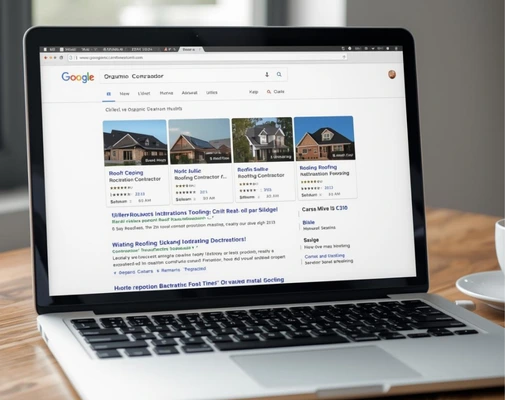
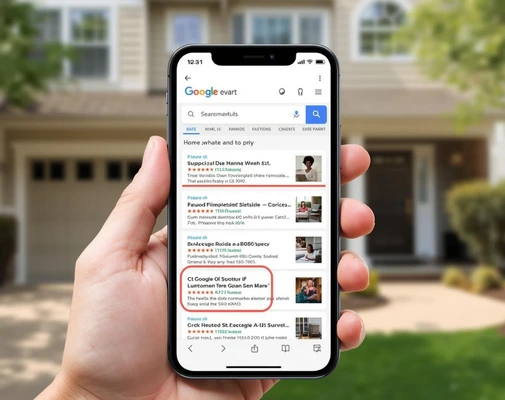
Google Ads places your roofing company at the top of search results immediately — above organic listings and often above the Map Pack — by bidding on target keywords. When a homeowner searches “emergency roof repair near me” and clicks your ad, you are charged for that click regardless of whether they call, submit a form, or bounce.
The speed advantage is real. A well-structured roofing ad campaign can produce calls within days of launch. But in competitive roofing markets, cost-per-click regularly reaches $40–60 for transactional keywords — meaning a single booked estimate can require $300–600 in ad spend to generate depending on your conversion rate. That is the cost of renting visibility rather than owning it.
SEO vs Google Ads — Speed of Results
SEO Timeline
Roofing SEO typically takes 3–6 months to produce meaningful ranking movement and 6–12 months to reach competitive positions in contested markets. The start is slow. The payoff compounds. A roofing company that invests consistently for 12 months builds a lead pipeline operating at a fraction of the cost-per-lead of paid advertising — permanently. A strong technical SEO foundation accelerates that timeline by ensuring Google can crawl, index, and rank your pages from day one rather than discovering and correcting structural problems six months in.
Google Ads Timeline
A Google Ads campaign can generate calls within 48–72 hours of launch. For roofing companies that need leads immediately — a new business with no organic visibility, a contractor entering a new service area, or a company responding to a major storm event — that speed has real strategic value. Ads win on speed. SEO wins on sustainability.
Cost Comparison — Which Is More Affordable?
The True Cost of Google Ads
The cost of roofing leads from Google Ads is not just the monthly budget — it is the ongoing, permanent cost of maintaining visibility. Every lead has a direct click cost. As competition increases in your market, those click costs rise. Roofing contractors who build their entire pipeline around ads often find themselves spending more each year just to maintain the same lead volume — a dependency that compounds rather than diminishes over time.
The True Cost of SEO
Roofing SEO requires upfront and ongoing investment — but the cost structure works in reverse. The longer you invest, the lower your effective cost-per-lead becomes as rankings strengthen and organic traffic compounds. Our high-intent keyword research ensures every page we build targets the searches that produce calls rather than traffic that looks good in reports but never converts — making every dollar of SEO investment work as efficiently as possible from the outset.
Lead Quality — Which Brings Better Customers?
Both channels generate genuine, high-intent roofing leads — but with meaningful behavioral differences.
Organic SEO leads arrive through a research process. The homeowner searched, found your website in results they trust, read your service pages, reviewed your project gallery, and chose to contact you. That pre-qualification process produces leads with higher baseline trust — shortening the sales cycle and improving close rates. A conversion-focused roofing website amplifies that trust further — ensuring homeowners who arrive from organic search find a credible, well-structured site that makes contacting you the obvious next step.
Ad leads can be equally high-intent — particularly for emergency searches where the homeowner needs a roofer immediately. But some homeowners actively skip paid results, perceiving organic listings as more credible. In those cases, organic visibility captures leads that ads structurally cannot.
Long-Term Value — Asset vs Expense
Every dollar spent on Google Ads produces a lead and nothing else. When the budget stops, the leads stop, and nothing has been built. Three years of ad spend leaves you exactly where you started the moment the campaign pauses.
Every dollar invested in roofing SEO builds a compounding digital asset. Rankings accumulate. Domain authority grows. Content earns backlinks. Our on-page SEO and content development service builds every service page, location page, and supporting content asset your roofing website needs — creating a search visibility infrastructure that generates leads at minimal marginal cost long after the foundational work is complete.
SEO is owning your visibility. Ads are renting it.
When to Use SEO, When to Use Ads
When Roofing Companies Should Prioritize SEO
SEO is the right primary investment for roofing companies focused on long-term growth, contractors looking to reduce dependence on paid advertising, and established businesses building brand authority in their local market. Our Google Business Profile management service runs alongside organic SEO — building Map Pack visibility that generates calls from homeowners who never scroll past the top three local results.
When Roofing Companies Should Prioritize Google Ads
Ads make strategic sense for new roofing businesses with no organic visibility, contractors entering new service areas who need immediate lead volume while SEO builds, and seasonal storm response campaigns where speed of deployment matters.
The Best Strategy — SEO and Google Ads Together
The most successful roofing contractors do not choose between SEO and ads. They use both with a clear understanding of what each is doing in their overall strategy.
Ads generate immediate lead volume while SEO builds — sustaining cash flow during the 3–6 month period before organic rankings produce meaningful results. As SEO strengthens and organic leads increase, ad spend can be selectively reduced — targeting only the highest-value keywords or seasonal surge periods where paid visibility justifies the cost. Eventually SEO produces enough organic baseline that ads become a choice rather than a necessity.
This transition — from ad-dependent to organically-driven — is the growth trajectory of every roofing company that has built a genuinely stable, scalable lead pipeline.
Common Mistakes Roofers Make
Relying on Google Ads permanently without investing in SEO is the most expensive long-term mistake a roofing contractor can make. Equally damaging is expecting SEO results within 30 days and abandoning it before rankings compound.
Running ads without conversion tracking means spending budget with no way to measure what is actually producing calls. Ignoring Google Maps optimization while investing in both SEO and ads leaves the highest-visibility local placement unaddressed. And sending paid traffic to a slow, poorly converting website wastes every dollar the campaign spends generating that click.
Final Thoughts
If you need leads this week — Google Ads. If you want leads that cost less every month — SEO. If you want to own your local market and make paid advertising optional — build the organic foundation first, run ads while it grows, and transition to a predominantly organic pipeline over 12–18 months.
The roofing contractors dominating their local search results used ads to survive while SEO compounded — and now they run ads because they want to, not because they have to.